
Why buying last year’s flagship phone is usually the smarter move
The gap between one generation of flagship phone and the next has been narrowing for years. The gap in price has not.
This is the clearest value decision in consumer technology and it takes about ten minutes of checking to make.
What actually changes year to year
A newer chip, which is meaningfully faster on a benchmark and which you will not notice, because both phones open your apps instantly.
Camera improvements, which are real but increasingly incremental and increasingly about processing rather than hardware.
A brighter screen, usually.
Some new software feature, which frequently arrives on last year's model in an update anyway.
Marginally better battery life, offset by a marginally larger screen.
Set two consecutive flagships side by side and use them for a week and most people cannot tell which is which without checking.
What you save
A last generation flagship, new and unsold, typically drops substantially once the successor launches. Second hand in good condition, considerably more.
You are frequently looking at a saving of thirty to forty percent for a phone that is one year into a support window of five or more.
The two things to check before you buy
Software support. This is the only thing that genuinely matters and people skip it.
Find out how long the manufacturer commits to security updates for that specific model, and subtract the year that has passed. If a phone gets five years of updates and you buy it at one year old, you have four years. That is fine. If it gets three and you buy it at two, you have one, and that is not fine.
Manufacturers publish this now and it varies enormously by brand and by price tier.
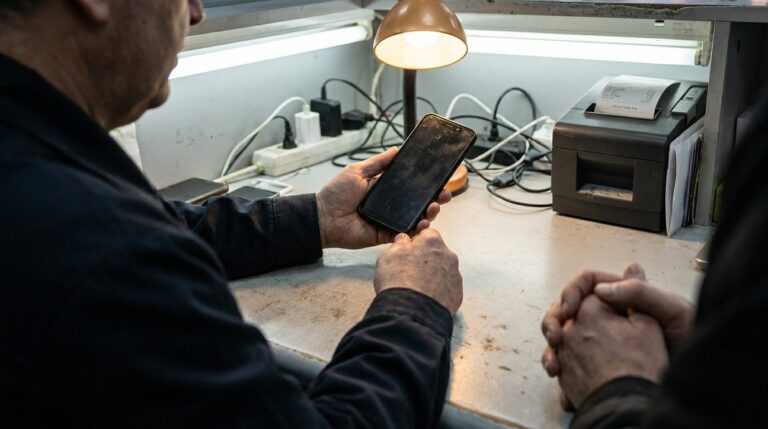
Battery. On a new unsold unit this is a non issue. On a used one, check the battery health percentage in the settings, and treat anything below about eighty-five percent as needing a replacement soon. A battery replacement is not expensive and it should come off the price.
Where to buy
The manufacturer's own refurbished store, where available, is the safest option. Tested, warrantied, and usually with a new battery.
Carrier certified pre owned, which varies.
Reputable independent refurbishers with a returns policy.
Private sale, which is cheapest and carries the most risk. If you do this, meet in person, check the phone is not carrier locked and not reported lost, and confirm the previous owner's account has been removed from the device. A phone still linked to someone else's account is a brick.
What I would not do
I would not buy a two or three generation old flagship expecting the same value. The support window shortens, the battery is older, and the savings stop scaling.
One generation back is the sweet spot. Two is acceptable if the support window is long. Three is a compromise.
I would also not buy a brand new budget phone over a one year old flagship at the same price. The flagship will have a better screen, better cameras, better build and usually a longer support window. This comparison comes up constantly and the flagship wins nearly every time.
The launch event problem
I am sceptical of launch events by trade. A great deal of what is presented as new is a refinement, and the presentation is designed to make a refinement feel like a reason.
Wait four weeks after a launch. The reviews are out, the previous model has dropped in price, and you can make the comparison with actual information rather than a keynote.
I have never once regretted waiting four weeks. I have regretted buying on day one.