How plastic parts inside high-end blenders cause early failure
A blender can cost several hundred dollars and still fail because of a moulded plastic part the size of a coin.
I have been taking things apart since I was nine and this one still irritates me, because it is a design choice rather than a limitation.
The part in question
On most blenders, the motor does not connect directly to the blade. There is a coupling between them: a splined piece on the motor shaft and a matching piece on the underside of the jar, which engage when you seat the jar.
On a great many machines, including expensive ones, that coupling is plastic. Sometimes both halves.
It is deliberate on some designs. The coupling is meant to be the sacrificial part, shearing before the motor burns out if the blades jam. That is sensible engineering. A three dollar part protecting a hundred dollar motor is a good trade.
The problem is when it wears out not from a jam but from ordinary use, and when the manufacturer makes it difficult or expensive to replace.
How to tell it is going
The motor runs and the blades turn slowly or not at all, especially under load. Thin liquids blend, thick ones stall.
A rattling or grinding from the base when it runs.
A smell of hot plastic.
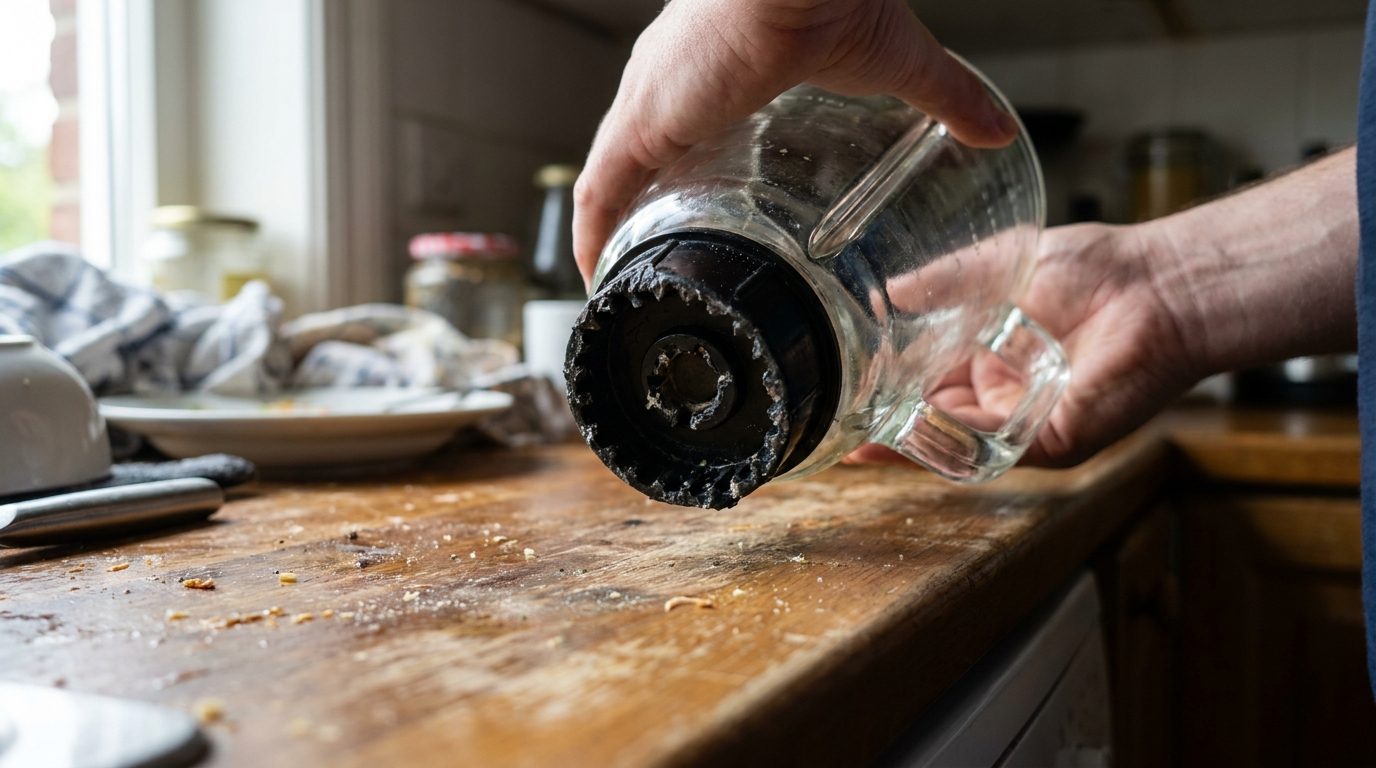
Visible rounding on the splines. Take the jar off, turn it over, and look at the drive piece. Sharp edges are good. Rounded, shiny, or chewed looking edges mean it is on the way out.
What wears it faster
Thick mixtures. Nut butters, frozen fruit with too little liquid, dough. These load the coupling hardest.
Running long without a break. Motors have a duty cycle and heat transfers to the plastic. A minute of nut butter and then a rest is very different from four minutes continuous.
Starting on high. Starting slow and ramping up loads the coupling progressively instead of shock loading it.
Overfilling. More resistance, more torque, more wear.
Ice with no liquid, which is the single most common thing I see people do to blenders and the hardest thing you can ask of one.
Fixing it
On many machines both coupling halves are replaceable, and the parts are cheap. The jar side usually unscrews, often with a special spanner supplied with the machine or available for a few dollars. The motor side is usually a reverse thread nut, which catches people out.
Replace both halves at the same time. Fitting a new part against a worn one wears the new one quickly, and I have had machines back in the shop for exactly that.
Before you buy
Ask whether the drive coupling is user replaceable and what a replacement costs. A manufacturer that sells the part for a few dollars and publishes a guide is telling you something good about how they expect the machine to be owned.
Metal couplings exist on some commercial and prosumer machines and they last far longer. They also transmit a jam straight to the motor, so they are paired with better motor protection. If you are buying for heavy use, this is worth asking about.
Check the warranty period on the motor specifically. Some good machines carry long motor warranties, which tells you the manufacturer is confident about the expensive part.
The general principle
In any machine, find the cheapest part in the power path and that is where it will fail.
That is not always a bad thing, and on a blender it is usually deliberate. What matters is whether you can buy that part for five dollars and fit it in ten minutes, or whether the manufacturer has decided the answer to a worn coupling is a new blender.