Why front-loading washing machines smell bad and how to fix it
It is not a defect and it is not your fault exactly, but it is fixable, and the fix is mostly about habits rather than parts.
Why it happens
A front loader uses far less water than a top loader, which is the whole point of it.
Less water means less rinsing. Detergent residue and body oils and fabric softener build up in places the water no longer reaches thoroughly. That residue is food.
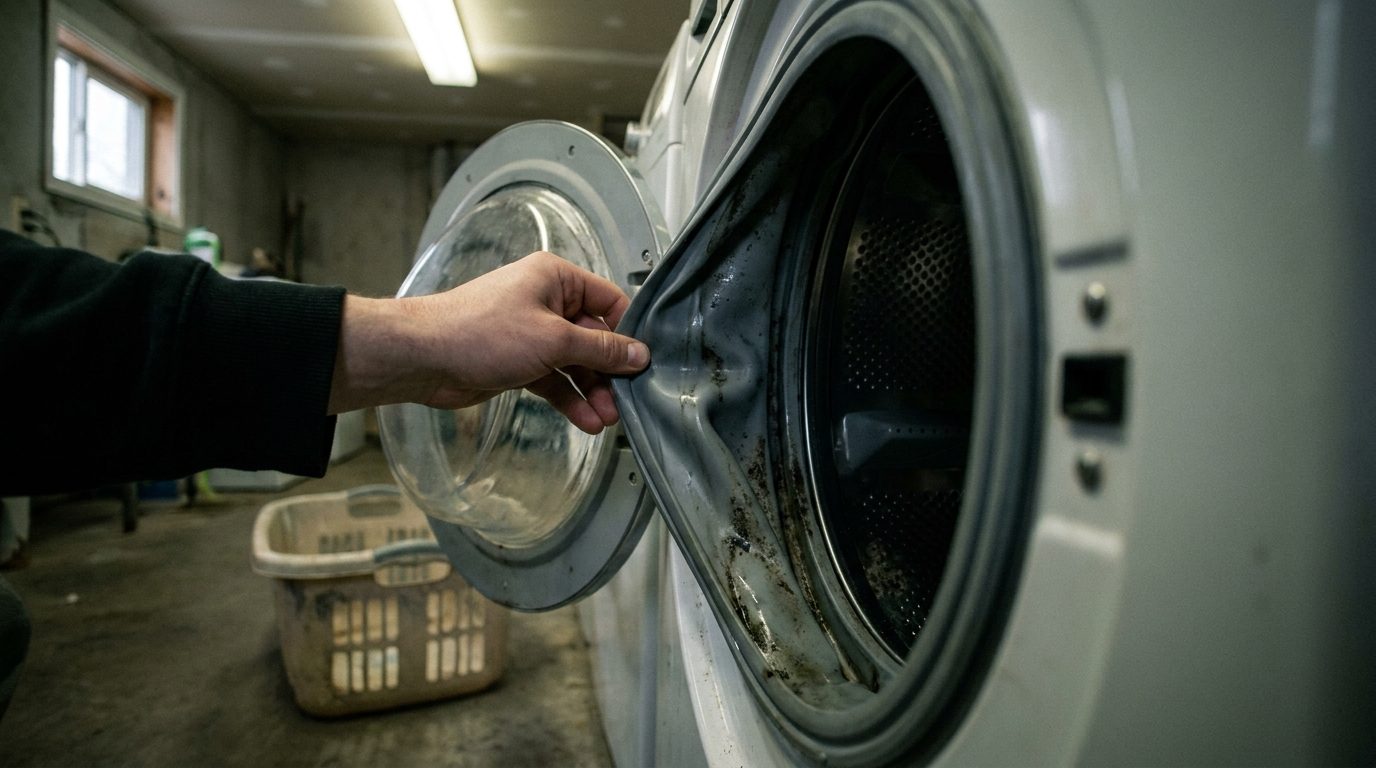
Then there is the door seal. The rubber bellows at the front has folds, and those folds hold water after every wash. Warm, damp, dark, with a film of detergent residue on it. That is where the smell lives, and if you have never looked inside the folds you are in for an unpleasant surprise.
And the door is shut between loads, which seals the moisture in.
The three things that cause most of it
Too much detergent. This is the biggest one. People use the amount they used in a top loader, or they fill the cap, and a front loader needs far less. Excess detergent does not rinse away, it coats the drum and the hoses.
Fabric softener. It is designed to leave a coating on fabric and it leaves the same coating on the machine. It is the single most common cause of a slimy black film in a dispenser drawer.
Leaving the door closed.
The fix, in order
Pull back the door seal and clean inside the folds. Use a cloth with warm soapy water, or a diluted bleach solution if it is bad. Check for coins, hair grips and tissue, which collect there and hold water.
Do this monthly and the smell largely stops coming back.
Take out the detergent drawer completely. Most of them release with a catch. Wash it in hot water and scrub the housing it sits in, which will have a film on it. This is grim work the first time.
Find and clean the drain pump filter. It is usually behind a small panel at the bottom front. Put a shallow tray and towels down first, because water will come out. This filter catches lint, coins and hair, and if it has never been cleaned it will smell strongly on its own.
Run a hot maintenance wash. Empty machine, hottest cycle, with either a dedicated washer cleaner or a large cup of white vinegar. Some machines have a drum clean programme, which is the same idea.
Then change the habits
Use less detergent. Start with half what you have been using and see whether the wash is still clean. In a soft water area you need remarkably little.
Stop using liquid fabric softener. If you want softness, wool dryer balls do a reasonable job and leave no residue. White vinegar in the softener compartment also works and does not coat anything.
Leave the door ajar between loads. Just ajar, enough for air. If you have small children or pets and an open door is a hazard, at least wipe the seal dry after the last load of the day.
Take the washing out promptly. Damp clothes sitting in the drum for a day undoes everything else.
Use a hot wash occasionally. Everything on cold saves energy and lets biofilm establish. One hot wash a week, towels or bedding, keeps the machine much cleaner.
When it is not habits
If the smell is sewage rather than musty, that is a drain issue, not a machine issue. The standpipe may lack a proper trap, or the trap has dried out, and you are smelling the drain rather than the washer.
If there is standing water in the drum between loads, the pump or the drain hose is partly blocked.
And if the machine is old and the smell persists after all of the above, the residue may have built up inside the outer drum where you cannot reach it. At that point a cleaning product will not fix it and neither, honestly, will I.