Why modern dishwashers take twice as long to run as older models
A customer told me last spring that her new dishwasher was broken because a cycle took three and a half hours. It was not broken. It was doing exactly what it was designed to do, and the design is a direct consequence of federal efficiency rules.
The trade nobody explains at the point of sale
Dishwashers are subject to limits on water and energy use per cycle. Manufacturers meet them, and the way you meet them is by using less hot water.
Cleaning dishes requires some combination of water volume, water temperature, detergent action, mechanical spray and time. Take two of those away and you have to add the others.
So a modern machine uses a few gallons where an older one used many, heats that water more carefully, and compensates by running much longer and by recirculating the same water repeatedly through filters.
Time is the free variable. It costs the manufacturer nothing and it does not appear on the energy label in a way most buyers weigh.
The other changes you notice
No food grinder. Older machines had a small grinder that chopped debris and flushed it. They were noisy. Most modern machines use a filter instead, which is quieter and which you have to clean yourself.
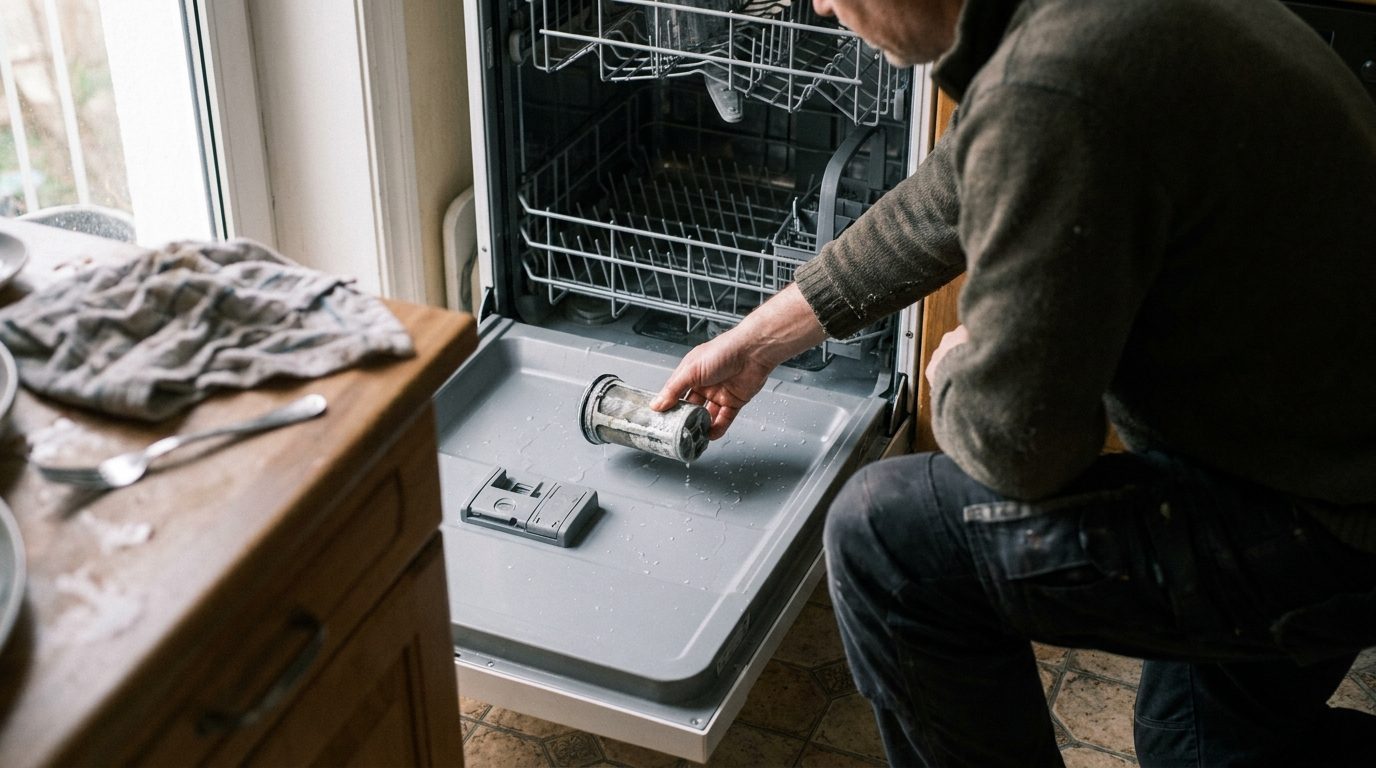
That filter is the most common cause of a dishwasher that has stopped cleaning well, and a very large share of customers do not know it exists. It is in the bottom, it twists out, and it should be rinsed every few weeks.
Condensing drying instead of a heated element. Heated drying uses electricity, so many machines now rely on residual heat and a cool stainless interior to condense moisture. It works less well on plastics, which is why your plastic containers come out wet and everyone blames the machine.
More sensors. Soil sensors extend the cycle when they detect dirty water, so the same programme can run for different lengths on different days. People find this alarming and it is the machine working properly.
What actually makes it clean
Hot incoming water. Run the kitchen tap until it is hot before starting the machine, so it does not begin with a slug of cold water it then has to heat. This shortens the cycle and improves results, and it is the easiest thing on this list.
Do not pre rinse. Detergents contain enzymes that need something to work on, and a plate rinsed completely clean can actually come out worse. Scrape, do not rinse.
Clean the filter. Every few weeks, under the tap.
Use rinse aid. It matters far more on a condensing dryer machine than it did on a heated one, and skipping it is behind most complaints about spotting and wet dishes.
Load so water can reach everything. Nothing nested, nothing blocking the spray arms, and check the arms spin freely before you close the door.
Which cycle to use
Not the quick cycle, most of the time. The short programmes achieve their speed with more water and more heat, so they are less efficient and often clean worse.
The long normal or eco cycle is the one the machine was designed around and it gives the best results. Run it overnight and the duration stops being a problem.
Use the heavy cycle when you genuinely have baked on residue, not by default.
When it really is broken
Three and a half hours is normal. Six hours, or a cycle that never ends, is not.
A machine that runs long and leaves dishes dirty usually has a blocked filter, a blocked spray arm, or a failing heating element.
A machine that runs long and stops mid cycle is more likely a drain issue or a control board.
Bring me the model number and roughly how old it is and I can usually tell you over the phone which of those it is, and whether it is worth fixing.